
The best way to store cannabis is simple: keep it in an airtight glass jar, in a cool, dark place, at a steady relative humidity of about 55% to 65%, and locked away from kids and pets. Light, heat, air and moisture are what slowly break down cannabinoids and aromas, so good storage is mostly about keeping those four things out.
Storage matters for two reasons. First, freshness: research shows THC and especially terpenes fade over months at room temperature. Second, safety: poison centers have seen a sharp rise in young children eating cannabis edibles, and almost all of those cases happen at home.
Below: what degrades cannabis, the best containers, how to store edibles, vapes and concentrates, and how to set up a lockable stash.
Key takeaways
- Light is one of the biggest causes of THC loss. Store cannabis in the dark, in opaque or tinted containers.
- Room temperature is fine for a few weeks, but cooler storage slows the breakdown of THC and aroma.
- Steady, moderate humidity keeps flower from turning brittle or growing mold.
- Glass jars beat plastic bags. Two-way humidity packs help keep moisture steady.
- Keep every product in child-resistant packaging, locked up and out of sight. Storage and possession rules differ by state and province, so check yours.
What degrades cannabis: the four enemies
Like coffee beans or spices, cannabis changes over time. Its key compounds are cannabinoids (like THCA, which turns into THC with heat) and terpenes (aroma compounds). Four things speed up their breakdown.
1. Light and UV
Older research reviewed by the United Nations Office on Drugs and Crime found that exposure to light was “the greatest single factor” in cannabinoid loss, citing a 1976 study by Fairbairn and colleagues. UV light is especially harsh. That’s why a clear jar on a sunny windowsill is one of the worst places to keep your stash.
2. Heat
Heat speeds up chemical changes. In a 2020 study from the Technion in Israel, flower stored in the dark at 25°C (77°F) showed the biggest changes of all temperatures tested, with THCA dropping about 33% after one year. The researchers suggested whole flower held up best at about 4°C (39°F), which is roughly fridge temperature.
Keep cannabis away from stoves, radiators, car dashboards and the top of the fridge.
3. Air and oxygen
Oxygen slowly oxidizes THC into CBN, a different cannabinoid. A four-year study of cannabis resin by the Swedish National Forensic Centre, published in 2019, found THC dropped 64% to 74% in samples left open to air at room temperature. Samples sealed from air in ambient light and temperature lost less, 25% to 42%. Samples kept in the dark in a freezer showed no measurable change.
Another four-year study from Italy, also published in 2019, found the same pattern: samples kept in closed storage lost far less THC than samples left open to room air.
4. Humidity
Moisture is a balancing act. Cannabis that is too dry gets brittle, harsh and loses aroma faster. Cannabis that is too wet can grow mold. The ASTM D8197 industry standard sets a water activity range of 0.55 to 0.65 for dried flower, which is why 55% to 65% relative humidity is the common storage target. California’s testing rules, for example, fail dried flower if its water activity goes above 0.65.
How to store cannabis: containers compared
Your container does most of the work. It should block light, seal out air, avoid static and hold steady humidity. Here’s how common options compare.
| Container | Airtight? | Blocks light? | Best for | Watch out for |
|---|---|---|---|---|
| Glass jar (clear) | Yes, with a good seal | No | Flower kept in a dark cabinet | Light exposure if left out |
| Glass jar (amber, violet or opaque) | Yes | Mostly | Long-term flower storage | Costs a bit more |
| Original dispensary packaging | Varies | Often | Short-term storage; child safety | Some pouches aren’t fully airtight once opened |
| Plastic zip bags | Poorly | No | Very short trips only | Static pulls off trichomes; flower gets crushed |
| Plastic tubs or pill bottles | Somewhat | Sometimes | Pre-rolls, short-term | Plastic can let air through over time |
| Metal tins | Sometimes | Yes | Small amounts | Lids may not seal well |
| Lockable stash box | Box itself usually not | Yes | Holding jars and packages safely | Put an airtight jar inside it |
Why glass jars win
Glass doesn’t hold static or give off odors, and a jar with a rubber gasket seals well. Pick a jar size that fits your amount, since a half-empty jar holds more air. If your jar is clear, keep it inside a drawer, cabinet or box.
Do humidity packs help?
Two-way humidity packs release or absorb moisture to hold a set level, usually 58% or 62% for cannabis. They are a simple way to stay within the 55% to 65% range, especially in very dry or very humid climates. Replace them when they turn hard and crunchy. Don’t use loose water sources like damp paper towels or fruit peels, which can add too much moisture and invite mold.
Should you refrigerate or freeze flower?
Cold slows THC loss, but there are tradeoffs. Opening a cold jar in a warm room can cause condensation, which adds moisture. Frozen trichomes also get brittle and can snap off when handled. In the Technion study, terpenes actually dropped the most at very cold temperatures (below -20°C). For most people, a cool, dark cabinet is the practical sweet spot. If you do refrigerate, use an airtight jar and let it reach room temperature before opening.
How to store edibles, vapes and concentrates
Different products need slightly different care. When in doubt, follow the storage directions and “best by” date on the label.
Edibles
- Keep edibles in their original child-resistant, labeled package so no one mistakes them for regular food.
- Store them separately from household snacks, candy and drinks. Health Canada specifically recommends keeping edibles apart from regular food.
- Chocolate and gummies can melt or stick in the heat, so keep them cool. Baked goods and drinks may need the fridge once opened. Check the package.
- Clearly label any homemade edibles and handle them with extra caution, since they have no tamper-proof packaging.
Vape cartridges and pens
- Store cartridges upright at room temperature, away from direct sun and heat, which can thin the oil and cause leaks.
- Never leave a vape pen in a hot car. Batteries and heat don’t mix.
Concentrates
- Use small glass or silicone containers with tight lids, and keep them in a cool, dark place.
- Many concentrates change texture with heat. Some people refrigerate them for longer storage; if you do, keep the container sealed until it warms up to avoid moisture.
- In the Technion study, cannabis extracts were less stable than whole flower, so plan to use them sooner.
How long does cannabis stay fresh? A shelf-life guide
There is no single expiration date for cannabis. Products don’t usually become unsafe just from age, but potency and flavor fade. Mold, a strange smell or a damp feel are signs to throw something out. This table summarizes general guidance based on the research above. Always follow the “best by” or packaging date on legal products.
| Product | Best storage | What the evidence says | Freshness tip |
|---|---|---|---|
| Flower (whole buds) | Airtight glass, dark, cool, steady humidity | Whole buds held up best at fridge-like temperatures; aroma faded faster than THC (Milay et al., 2020) | Buy amounts you’ll use within a few months for best aroma |
| Ground flower | Grind right before use | Grinding sped up terpene loss in the same study | Don’t pre-grind a big batch |
| Edibles | Original package, cool; fridge if labeled | Shelf life depends on the food itself | Follow the package date |
| Vape cartridges | Upright, room temperature, out of sun | Extracts were less stable than flower in storage research | Check for darkening or leaks |
| Concentrates and resin | Sealed, dark, cool | Resin sealed in a dark freezer showed no measurable THC change over the study (Grafström et al., 2019) | Keep the lid closed between uses |
Want to compare products before you buy? Our strain library lists common strains and their reported aroma profiles, and you can find licensed dispensaries near you to buy fresh, recently packaged products in amounts you’ll actually use.
Safe storage at home: protecting children and pets
Freshness is nice. Safety is non-negotiable. Edibles often look exactly like regular candy, cookies or gummies, and young children can’t tell the difference.
What the data shows
A study published in Pediatrics in 2023 looked at calls to U.S. poison centers about children under age 6 who ate cannabis edibles. Reported cases rose from 207 in 2017 to 3,054 in 2021, and 90.7% of all cases happened in the child’s own home rather than at a friend’s house or day care. The stat row below sums up the rest of the findings.
Pets are at risk too. The ASPCA Animal Poison Control Center reported in March 2023 that calls about pets possibly eating marijuana had risen nearly 300% over the previous five years. The most common cases involved baked goods made with cannabis.
How to set up lockable storage
Health Canada, Colorado’s cannabis education program and other public agencies give the same core advice: keep cannabis locked up, out of sight and out of reach. Here’s how to do that in practice.
- Choose a locking container. A lockbox, small safe or locking cabinet works well. Look for a sturdy key, combination or code lock rather than a simple latch.
- Put it up high and out of sight. A high shelf in a closet is better than a nightstand, purse or kitchen counter.
- Keep products in their child-resistant packaging. Child-resistant doesn’t mean childproof, so the package goes inside the locked box, not instead of it.
- Keep the key or code private. Don’t leave the key in the lock or hide it in an obvious spot.
- Store edibles away from regular food. Never put cannabis gummies or cookies in the pantry or the fridge’s snack drawer without a locked container.
- Update as kids grow. Colorado’s guidance notes that what works for toddlers may not stop older kids or teens.
- Talk to guests and sitters. Ask visitors to keep their own cannabis locked away too, including in bags and coats.
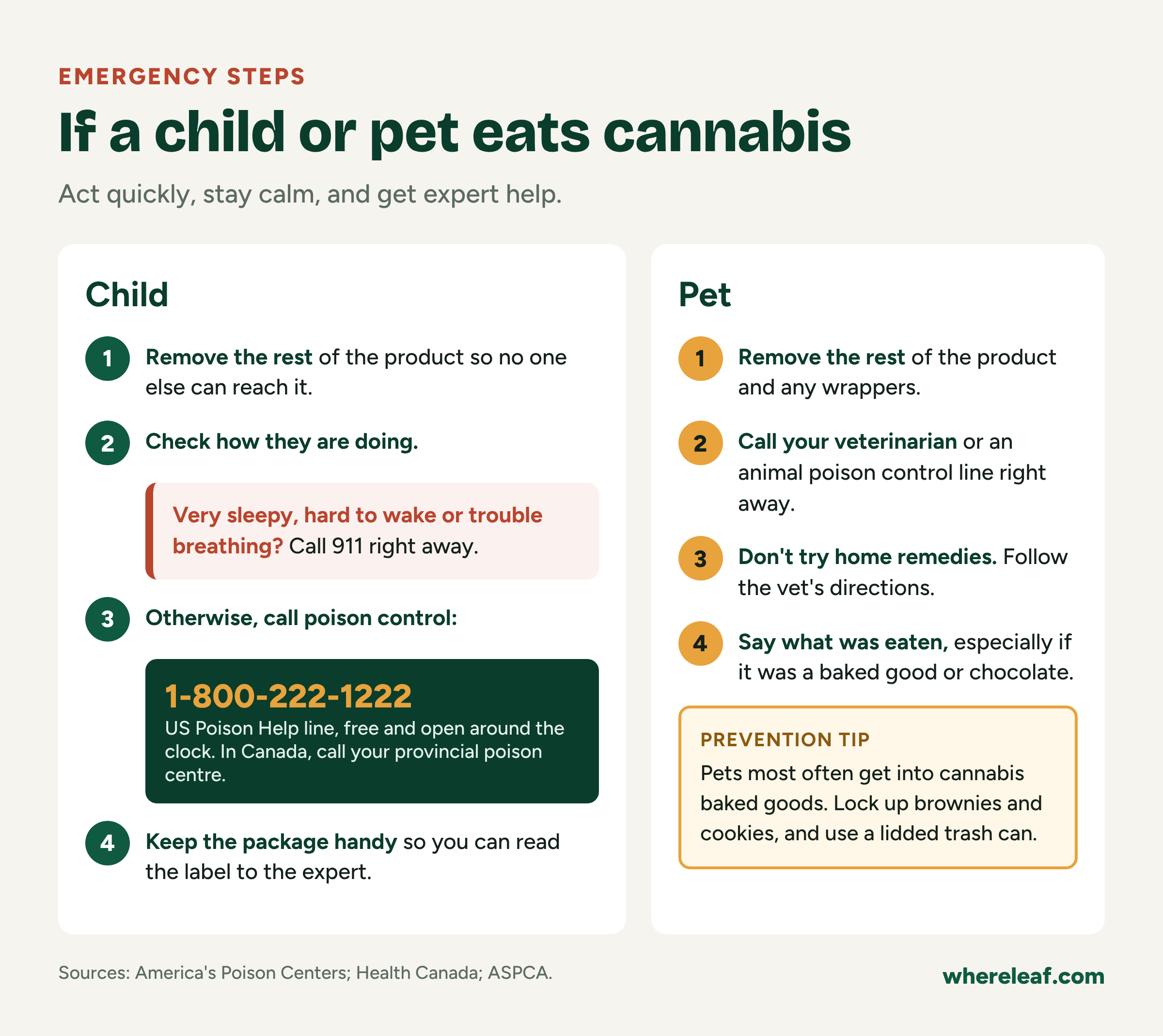
If a child eats cannabis: In the U.S., call the free Poison Help line at 1-800-222-1222. If the child is very sleepy, hard to wake, or having trouble breathing, call 911 right away. In Canada, call your provincial poison centre or 911. If a pet may have eaten cannabis, call your veterinarian.
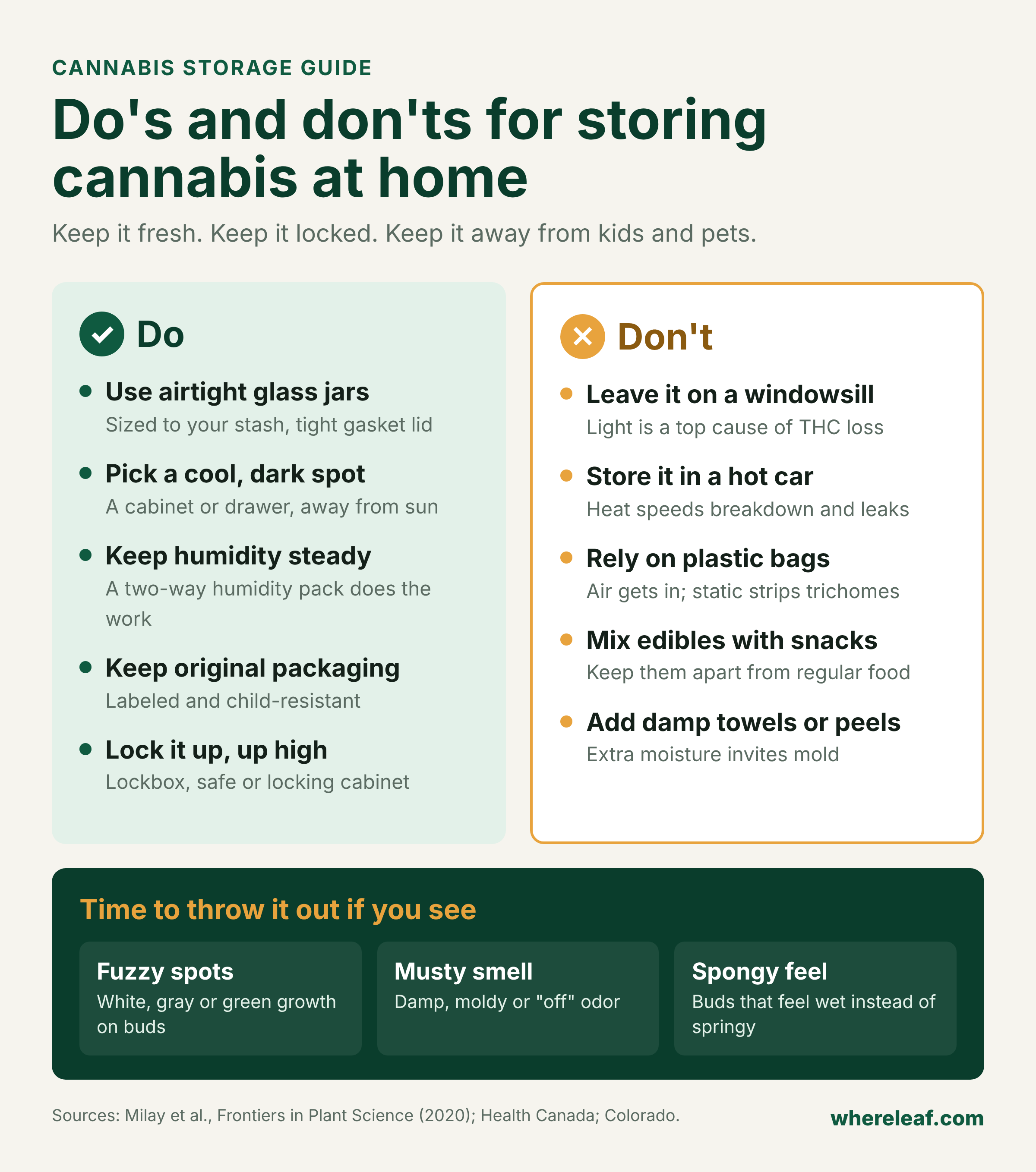
Do’s and don’ts for storing cannabis
Do
- Use airtight glass jars sized to your stash.
- Keep jars in a cool, dark cabinet or drawer.
- Hold flower between 55% and 65% relative humidity.
- Keep every product in labeled, child-resistant packaging.
- Lock cannabis away from children, teens, guests and pets.
Don’t
- Leave cannabis on a windowsill, dashboard or near a heat source.
- Store flower long-term in plastic bags.
- Put edibles in the pantry or fridge next to regular snacks.
- Add damp paper towels or fruit peels to “rehydrate” flower.
- Carry cannabis across state or national borders, even if it’s legal on both sides.
Your cannabis storage checklist
- Airtight glass jar (amber or kept in the dark)
- Two-way humidity pack (58% or 62%) for flower
- Lockbox, safe or locking cabinet
- Original child-resistant packaging kept and used
- Labels for anything homemade
- Storage spot that’s cool, dark and up high
- Poison Help number saved in your phone: 1-800-222-1222
Remember that cannabis is for adults only (21+ in U.S. legal states, 18+ or 19+ in Canada depending on the province). Start low and go slow, and never drive after using cannabis. Home storage and possession rules vary by state and province, so check your local regulator for the rules where you live.
Run a dispensary or make storage products? You can list your business on WhereLeaf, browse suppliers, or see our listing packages.
Traveling? Storage rules change once you leave home: cannabis can’t cross state or national borders, so read can you bring weed on a plane? before you pack.
Frequently asked questions
What is the best way to store cannabis?
Store it in an airtight glass jar in a cool, dark place at 55% to 65% relative humidity. Keep it in child-resistant packaging inside a locked box, out of reach of children and pets.
What humidity should cannabis be stored at?
Most guidance targets 55% to 65% relative humidity, which matches the 0.55 to 0.65 water activity range in the ASTM D8197 standard for dried flower. Two-way humidity packs at 58% or 62% make this easy.
Does cannabis lose potency over time?
Yes. THC slowly oxidizes into CBN, a different cannabinoid, and aroma compounds fade even faster. The studies in this guide show the loss speeds up with light, heat and air, so buy amounts you will finish within a few months.
Should I keep cannabis in the fridge or freezer?
Usually not for flower. Condensation can add moisture and frozen trichomes break off easily. A cool, dark cabinet works for most people. Follow the label for edibles.
Is it OK to store cannabis in plastic bags?
Only briefly. Plastic bags aren’t fully airtight, let in light, and build static that pulls trichomes off flower. Glass jars are better.
What should I do if my child or pet eats cannabis?
For a child in the U.S., call the free Poison Help line shown in the emergency steps above, or 911 if the child is hard to wake or has trouble breathing. In Canada, call your provincial poison centre or 911. For a pet, call your veterinarian or the ASPCA Animal Poison Control Center.
Sources
- Frontiers in Plant Science: Milay et al., Metabolic Profiling of Cannabis Secondary Metabolites for Evaluation of Optimal Postharvest Storage Conditions (2020)
- UNODC Bulletin on Narcotics: Narayanaswami et al., study of cannabis sample stability in storage (1978)
- Labcompare: Real-Time, Four-Year Storage of Cannabis Resin, summarizing Grafström et al., Forensic Science International (2019)
- PubMed: Zamengo et al., The Role of Time and Storage Conditions on the Composition of Hashish and Marijuana Samples: A Four-Year Study (2019)
- ASTM Standardization News: Two Cannabis Standards You Should Know About (D8196 and D8197)
- Cornell LII: Cal. Code Regs. Tit. 4, § 15717, Moisture Content and Water Activity Testing
- Contemporary Pediatrics: Edible Cannabis Exposure and Toxicity Increase Among Young Children, on Tweet et al., Pediatrics (2023)
- NPR via WUNC: 3,000 Young Children Accidentally Ate Weed Edibles in 2021, Study Finds (2023)
- ASPCA: Recreational Drugs Makes ASPCA Annual List of Top Pet Toxins for the First Time (2023)
- Health Canada: Safe Storage of Cannabis
- State of Colorado: Safe Storage
- America’s Poison Centers: Edible Cannabis
Last updated: October 2026. Laws and prices change; always check your state or provincial regulator.