Tangie
Also known as Tangie
At a glance
- Possible side effects
- Dry MouthDry Eyes
About Tangie
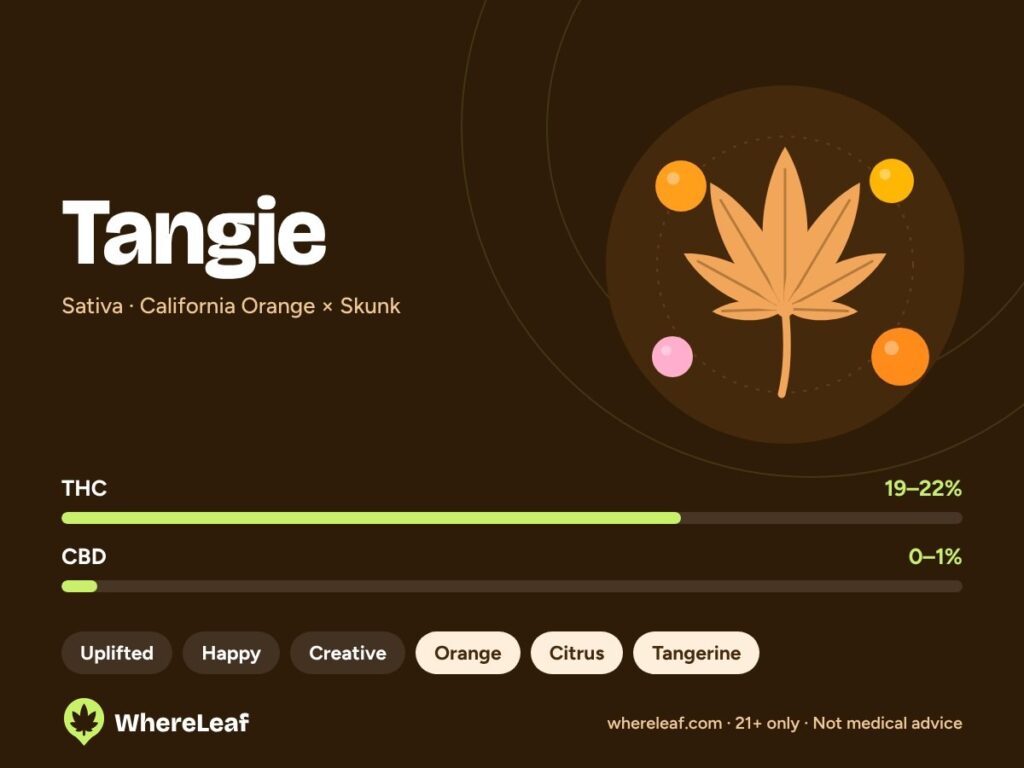
Tangie is a sativa from DNA Genetics, created by crossing California Orange with a Skunk. It was developed as a revival of the classic Tangerine Dream profile and has since become a go-to name for orange-forward cannabis.
The defining feature is an intense tangerine aroma. Opening a jar of Tangie often brings to mind freshly peeled oranges, sweet and zesty. Limonene is the terpene behind many citrus scents, myrcene can add a fruity, earthy depth, and caryophyllene contributes a slight spice. The buds are usually light green with plenty of orange hairs, fitting the theme.
People often report feeling uplifted, happy and creative with Tangie, so it is typically considered a daytime strain. It is commonly described as cheerful and bright, a good match for social plans, outdoor activities or creative projects. THC tends to range from 19% to 22%, with little CBD, though potency varies by grower and batch.
Tangie tends to suit consumers who enjoy upbeat sativas and fruit-forward flavors. Newer consumers should start low and go slow, and everyone should check the lab results on the package. Search WhereLeaf to find Tangie at licensed dispensaries and delivery services near you.
Tangie terpene profile
Terpenes are the natural oils that give each strain its smell and taste. Listed from most to least dominant.
Smells like: Earthy, musky, ripe fruit
Also found in: Mango, hops, lemongrass, thyme
The most common terpene in cannabis. Strains led by myrcene are often described as relaxing and heavy.
Smells like: Peppery, spicy, woody
Also found in: Black pepper, cloves, cinnamon
Gives strains a spicy kick. Common in kush, cookies and gelato lines.
Smells like: Citrus, lemon, orange peel
Also found in: Lemon and orange rinds, juniper
Behind most citrus flavors. Strains rich in limonene are often described as bright and upbeat.
Tangie family tree
Growing Tangie
- Difficulty
- Moderate
- Flowering time
- 9-10 weeks
- Plant height
- Tall
- Yield
- High
Only grow where home growing is legal, and follow local plant limits.
Tangie compared with its parents
How is Tangie different from Skunk?
Tangie is a sativa, while Skunk is a hybrid. Tangie tests higher in THC (around 21% vs 17%). Tangie is more often described as creative. Skunk is better known for feeling relaxed.
For adults of legal age. Not medical advice. THC and CBD vary by grower and batch — check the product label. Effects vary by person. Start low, go slow, and never drive high.