Forbidden Fruit
Also known as Forbidden Fruit
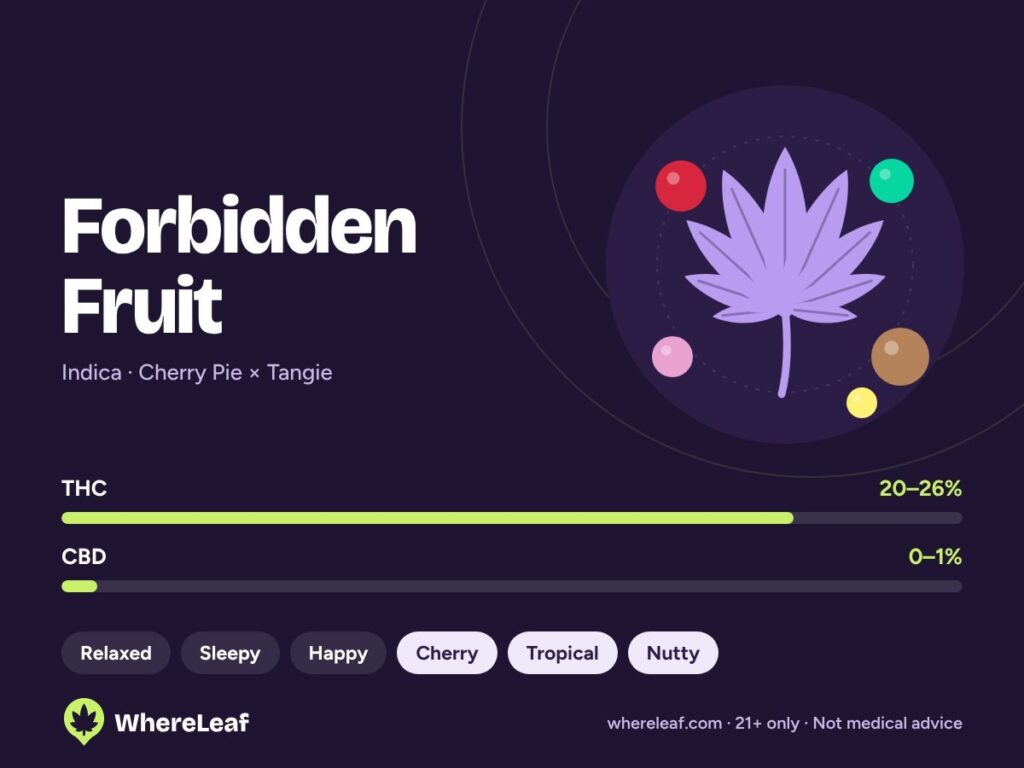
At a glance
- Possible side effects
- Dry MouthDry Eyes
About Forbidden Fruit
Forbidden Fruit is an indica-dominant strain that crosses Cherry Pie with Tangie. It combines the dessert-style sweetness of Cherry Pie with the bright, tropical citrus character Tangie is known for.
The buds are often striking, with deep purple shades against green leaves and bright orange pistils. The aroma is sweet and fruity, with cherry up front and a tropical, tangerine-like note behind it. Limonene is the terpene behind many citrus scents, myrcene often contributes a ripe, fruity musk, and caryophyllene adds a light spicy finish that keeps the sweetness from becoming one-dimensional.
People often report a relaxed, happy mood that slowly gives way to sleepiness. Many describe it as a good match for winding down at night, whether that means a movie, music or simply settling in at home. THC generally tests between 20% and 26%, with minimal CBD, though potency varies by grower and batch.
Forbidden Fruit tends to suit consumers with some experience, especially given its upper THC range. Start low and go slow, give it time before deciding on more, and check the lab results on the package. You can find Forbidden Fruit at licensed dispensaries and delivery services near you on WhereLeaf.
Forbidden Fruit terpene profile
Terpenes are the natural oils that give each strain its smell and taste. Listed from most to least dominant.
Smells like: Earthy, musky, ripe fruit
Also found in: Mango, hops, lemongrass, thyme
The most common terpene in cannabis. Strains led by myrcene are often described as relaxing and heavy.
Smells like: Citrus, lemon, orange peel
Also found in: Lemon and orange rinds, juniper
Behind most citrus flavors. Strains rich in limonene are often described as bright and upbeat.
Smells like: Peppery, spicy, woody
Also found in: Black pepper, cloves, cinnamon
Gives strains a spicy kick. Common in kush, cookies and gelato lines.
Forbidden Fruit family tree
Growing Forbidden Fruit
- Difficulty
- Moderate
- Flowering time
- 8-9 weeks
- Plant height
- Medium
- Yield
- Medium
Only grow where home growing is legal, and follow local plant limits.
Forbidden Fruit compared with its parents
How is Forbidden Fruit different from Cherry Pie?
Forbidden Fruit is an indica, while Cherry Pie is a hybrid. Forbidden Fruit tests higher in THC (around 23% vs 20%). Forbidden Fruit is more often described as sleepy. Cherry Pie is better known for feeling euphoric.
How is Forbidden Fruit different from Tangie?
Forbidden Fruit is an indica, while Tangie is a sativa. Forbidden Fruit tests higher in THC (around 23% vs 21%). Forbidden Fruit is more often described as relaxed and sleepy. Tangie is better known for feeling creative and uplifted.
For adults of legal age. Not medical advice. THC and CBD vary by grower and batch — check the product label. Effects vary by person. Start low, go slow, and never drive high.