Clementine
Also known as Clementine
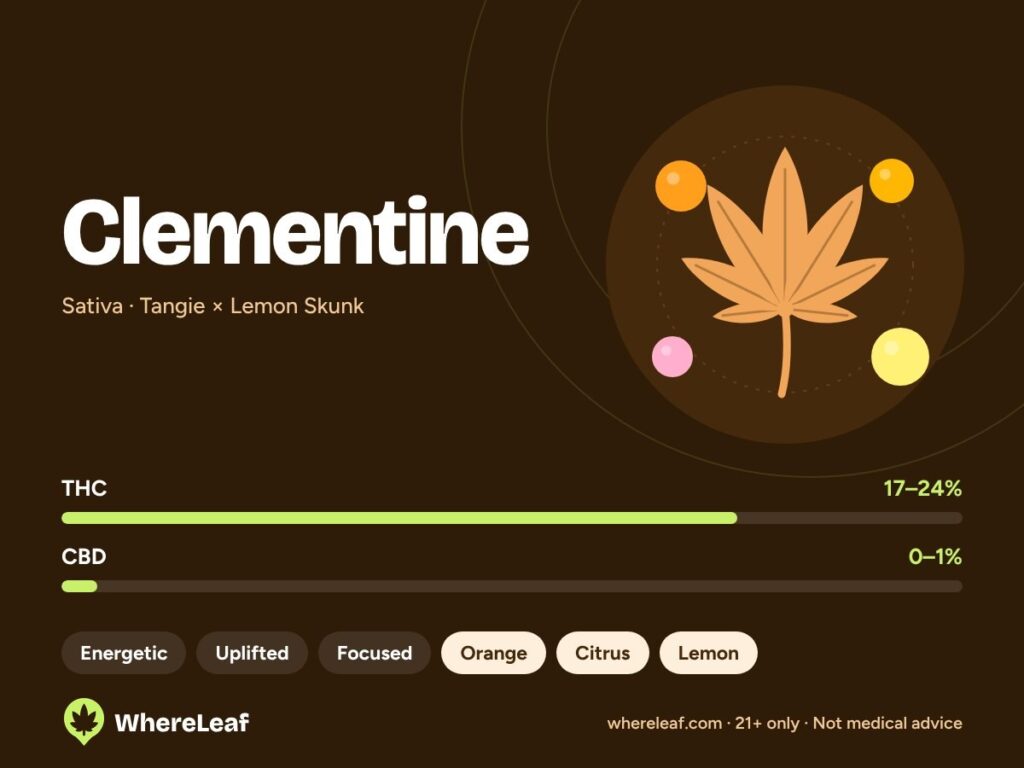
At a glance
- Possible side effects
- Dry MouthDry Eyes
About Clementine
Clementine is a citrus-forward sativa that comes from crossing Tangie with Lemon Skunk. Both parents are known for bright fruit aromas, so it is no surprise that Clementine has become a go-to name for fans of orange and tangerine profiles. It is also one of the parents of the popular hybrid Mimosa.
Buds tend to be medium-sized and lime green, with bright orange pistils and a sticky coat of resin. The aroma is often compared to freshly peeled oranges with a sweet, candied finish. Limonene is the terpene behind many citrus scents, terpinolene tends to add a fresh, fruity sparkle, and myrcene contributes a softer, earthy undertone.
People often report an energetic, uplifted experience with a clear sense of focus, which makes Clementine commonly described as a daytime strain. Many reach for it before creative work, chores or a long walk. THC typically ranges from about 17% to 24%, with potency varying by grower and batch.
Clementine tends to suit consumers who prefer an active, clear-headed style of strain. Those who are sensitive to energetic sativas should start low and go slow. Check the lab results on the package to confirm THC and terpene levels, and use WhereLeaf to find Clementine at licensed dispensaries and delivery near you.
Clementine terpene profile
Terpenes are the natural oils that give each strain its smell and taste. Listed from most to least dominant.
Smells like: Fresh, floral, herbal, a little fruity
Also found in: Lilac, apples, tea tree, nutmeg
Less common as a lead terpene. Typical of lively sativas such as Jack Herer and Durban Poison.
Smells like: Earthy, musky, ripe fruit
Also found in: Mango, hops, lemongrass, thyme
The most common terpene in cannabis. Strains led by myrcene are often described as relaxing and heavy.
Smells like: Citrus, lemon, orange peel
Also found in: Lemon and orange rinds, juniper
Behind most citrus flavors. Strains rich in limonene are often described as bright and upbeat.
Clementine family tree
Growing Clementine
- Difficulty
- Moderate
- Flowering time
- 8-9 weeks
- Plant height
- Tall
- Yield
- Medium
Only grow where home growing is legal, and follow local plant limits.
Clementine compared with its parents
How is Clementine different from Tangie?
Both test at about the same THC (around 21%). Clementine is more often described as energetic and focused. Tangie is better known for feeling creative and happy.
How is Clementine different from Lemon Skunk?
Clementine is a sativa, while Lemon Skunk is a hybrid. Clementine tests higher in THC (around 21% vs 19%). Clementine is more often described as focused. Lemon Skunk is better known for feeling happy.
For adults of legal age. Not medical advice. THC and CBD vary by grower and batch — check the product label. Effects vary by person. Start low, go slow, and never drive high.